Episode 118: The Creative Dark: White-Knuckling, AI, and Running with Caroline Mays
Podcast
Episode 118: The Creative Dark: White-Knuckling, AI, and Running with Caroline Mays
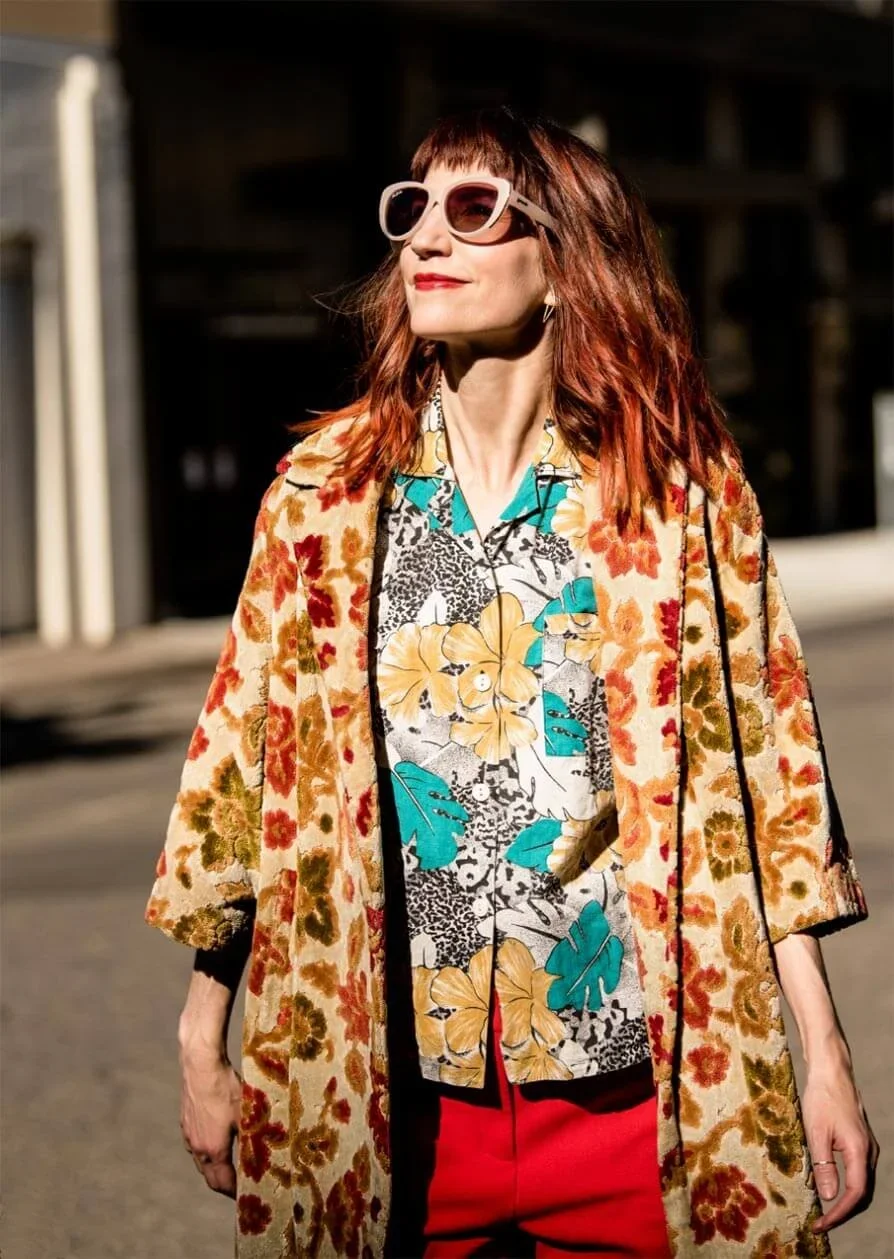
“You’ve got to bushwhack through the creative dark, sometimes white-knuckling your way through. But eventually, the clearing shows up.” — Caroline Mays
This episode is your invitation to explore creativity through the lens of identity, friction, and the clearing that follows the dark. I’m joined by Caroline Mays, writer, brand strategist, and founder of Switchblade Lemonade.
Caroline defines creativity as a kind of spark that happens through process of rubbing two sticks together. She shares how her work is rooted in dialogue, deep listening, and helping people love the way their mind works so, they can share it with others.
We talk about tech failures, nervous system overwhelm, and running to reset. We explore her nuanced view on AI, where it helps (spreadsheets) and where it falls flat (writing that lacks soul) and how humor and movement can snap us out of a blocked state.
Caroline reminds us that the creative process is often messy and emotional, and that white-knuckling it can still lead to clarity. She brings honesty, sharp insight, and a fierce sense of creativity to her work.
Listen to the episode on Apple Podcasts and Spotify, or on your favorite podcast platform while you cook, clean, or create.
Resources Mentioned:
Explain My Brand 10-week branding course. Tell her Carla sent you!
Radiolab’s Jad Abumrad and the metaphor of the “German Forest”
Questions to Reflect On:
Sit with these questions: Journal, take them on a walk, create a voice note, chat with a friend, or sit with a cup of tea and reflect on them.
Leave a comment on Substack or connect with us on LinkedIn Carla Contreras & Caroline Mays to share your takeaway from the episode.
Where might you be trying to white-knuckle your way through something creative right now?
What small moment of levity or humor helped you move forward recently? How can you invite more of that in?
xo Carla
PS: Upgrade to Nourished Creator Studio for quick-hit micro workshops, BTS Podcast, and simple tools to help you work on your creative dreams now, not someday.
SHARE THE PODCAST
Wherever you are listening, please rate, review + subscribe to Nourishing Creativity. Send the podcast to your friends, post in your stories on Instagram & tag me @chefcarlacontreras
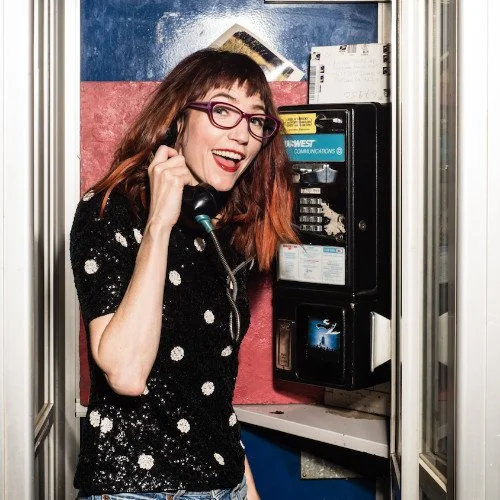
About Caroline Mays
Before starting my company a decade ago, I had no real “work history” to speak of, more of a slutty black book of job flings. I’d get hired at some respectable company, be panic-attack bored within 6 months, and quit by year’s end, retreating back to the restaurant scene where a shitty waitress can always find a gig.
In my defense, I could’ve sprinkled a wad of breadcrumbs on my keyboard, released the pigeons, and they’d have done just as fine a job meeting office demands.
It took years to accept I’m not the kind of person you can stick in a cubicle with nothing to build while my brain rots. To bring meaning to such a flip-floppy life, I began engaging in some nighttime literary activity.
First, I enrolled in a university writing program, a support group of sorts for people with impolite imaginations and no real lucrative interests. Afterwards, I took all the classes I could afford, stalked my favorite teachers, was taught by a few famous ones, read on stage and in the back of bookstores, published my most daring essay to date in an actual publication, wasted time considering an MFA, “scored the highest” of all the applicants (whatever that means), won scholarships, and wrote at residencies faraway.
One day, nearing the end of yet another job I was ecstatic to get and destined to hate, the spiritual damage I’d accrued from living this pattern felt more profound. If I was unfit for the structure of corporate, maybe the wild wild west of self-employment was more my speed.
I exited the traditional job market and started a business. Quickly, there were a couple of consistent clients, and my company burgeoned from there. With time, I took my familiar genre of creative memoir, combined it with the genre of “copywriting” and when those two forces met the stuffy, sometimes bogus veneer of business and professional identity-building, suddenly there was a more intriguing creature on display.
Turns out, intrigue is very good for one’s career.
Many career paths are circuitous. From the friction, the drama, the ignorance (oh my!), emerges the journey and everything it taught us.
Whether your trajectory has been straight or curvy (or repeatedly run into walls), our objective is to give shape to the sometimes messy character who’s been living your story and the point of view earned in the process. The result is perspective that doesn't waver (in a world that very much wants us wavering) and a brand identity that’s as vibrant, effective, and novel as it is true.
Find + Work With Caroline:
Carla (00:01):
Welcome to Nourishing Creativity. The cycle of the last few years has left you and me feeling mentally, physically, emotionally and creatively drained. Nourish your very full life through interviews with creatives and entrepreneurs about how they create and move through their creative blocks. If you don't know me, I'm Chef Carla Contreras, a food stylist and content strategist. You can find me Chef Carla Contreras across all social media platforms and more information in today's show notes. Caroline, welcome to the podcast. Can you please introduce yourself and how you serve your community?
Caroline (00:46):
Thank you so much for having me, Carla. My name is Caroline and I do what I call curated public persona for academics and corporate refugee types. And also every once in a while I get some creatives. The work is really a blend of career development and branding work. And the mission that's bubbling underneath is to get other people to fall in love with your brain and the way that you think and the way that you do things and the way that you conduct yourself and the point of view that you have. And in order to do that successfully, you have to do the work to kind of appreciate it and fall in love with it yourself. So yeah, there's a lot of aims development and also what are we going to say and why are we going to say it? And I also teach branding.
(01:46)
And so I haven't taught since COVID. I'm back in teaching and so that's pretty exciting.
Carla (01:53):
It's exciting to see you because I was part of that last COVID class.
Caroline (01:57):
Were you? Like the workshop?
Carla (01:59):
Yeah.
Caroline (01:59):
Yes. I remember that now that you mention it. Yeah. So that workshop, that Bio Light Beyonce workshop was a lead in to a bigger course where we really went into story, messaging, and even like positioning bios. We did a lot of, it was like a creation of very specific artifacts. This new course, there's also a creation of artifacts, but then there's also conversations happening around like how we manage our time in order to get things done. What do you actually need versus like, what is the market telling you you need? Yeah, there's just a lot more kind of thinking of the outside forces that pull us in 90 different directions and how do we manage all that and not get to the point that it derails us because we're all getting derailed all the time. So yeah, it's about creating the brand and then protecting it.
Carla (02:57):
Can you tell me about the last experience that sparked creativity? And I know that you have an interesting story about the first day of class.
Caroline (03:07):
Yes. The first day of class, we're all gathered. We meet up in the Zoom room. I've got my office set up. We had just made introductions and I was about to jump into my slides and kind of set the tone for the whole 10 weeks together. It was the slide that was about basically like we show up, we're not going to be in our cars, we're not going to be in the McDonald's drive through, we're not going to be out walking the dog. We're going to be like in an environment where we can be together and do this thing and the mission of the time. And then, so like right as I was pulling up that slide, I look over and like everyone's little screen is black, right? Everyone's little Zoom screen. And I was thinking there was like, it was just taking a moment to catch up.
(04:01)
And so I'm sitting there kind of like waiting for the faces to like show back up after I had like clicked onto the slideshow and then my internet just completely died. Just the internet was gone. It wasn't like a reboot your computer, the internet was gone. And so first of all, I just panicked for a second, but long story short, I ended up grabbing my computer, running across the street. There's a cafe across the parking lot from my office. I like yanked this table kind of over against the side of the building and it was a cloudy day, kind of threatening to rain. I live in Portland, Oregon. It rains. And then I was able to get back on. Luckily, I didn't know this had happened, but when I got kicked out, the host, someone else became the host of the meeting. And so it's not like everybody just went dark.
(04:54)
They were all still in the room together just without me, which made things a little bit better. I had to hold my laptop in the palm of my hand to kind of elevate it off of the table and like concentrate and be the leader of this class while there's like city sounds going on around me. It was a fucking nightmare. And so I made it, but I log back on and I said, "I will be writing about this with the group." And we just chuckled and went on. So if anything, it kind of brought us together. So that's a good segue to the first part of that question, the creativity piece. It's like humor kind of always creates the levity that you need to kind of get back into a creative mindset and kind of get back into the flow of just the relational mindset that you have to be in when you're in a group of people.
(05:48)
So I just made a joke and we went on with our business. Yeah. It's usually out of some type of pain, you know what I mean? Can come like a creative solution.
Carla (06:07):
How do you define creativity when it comes to your work?
Caroline (06:11):
So in my work, my little analogy for creativity is it's like rubbing two sticks together and seeing where you can start a fire because I get a lot of raw material from people. So I have a questionnaire that I've developed over the years and that goes out to ... I'm talking about one-on-one clients, right? So when I'm working with someone one-on-one and I'm helping them to write this biographical piece about their career and where that's led them and what point of view they have, what's the locuses of their ideas, like we're trying to kind of pinpoint where they're coming from. We do a long interview based off the answers to that questionnaire, like up to two hours. And so it's a lot of stuff that you're swimming in. And so when you start to plot the story out, we'll just focus on the story part of this process, it's like you start to lay things down and then there's these moments that kind of show up as a result of putting it down.
(07:19)
It's like this little opening, this little spark that's created from laying down this line and then laying down this line and kind of seeing between the two. And you know that it's right because you've talked to them for two hours and you've ... Even though they didn't say this exact thing, you're like, "This is probably right, like this feeling, this concept, this ideology." And so yeah, it's kind of in the process of doing and like I said, kind of rubbing things together that new information and new insight comes out and then people are like, "How'd you do that? " Just the process.
Carla (07:57):
What's your current relationship with creativity?
Caroline (08:01):
When you ask the question, this is where my mind went, is like, I am someone that is, if I get stressed out, if I'm overwhelmed, there's been a lot going on this year, like in our political landscape, media landscape, business, AI, there's a lot to be afraid of. And then just I've been developing this course and I've been delivering on stuff. I started a new newsletter. It's been a lot, a lot of balls in the year coupled with, like I said, just the era that we're in. And so when I get freaked out, my world gets really tiny, right? And I think that's what happens to a lot of people, right? Our vision gets really, really, really, really small. And that's not a creative place to be in because you're not seeing possibilities, you're not seeing any potential, you know what I mean? You're not seeing a way out, you're not seeing a light at the end of the tunnel.
(08:59)
Things start to close in. And so I've always been someone that has to go out and use my body almost like you're running away from the issue. And so there's a certain chemistry that I have to create within this person that kind of opens the world back up and certain connections that start being made just in the act of moving and activity. Been a lot of physical stuff going on this year just to kind of stay in the game. And AI is such a mixed bag. I really do not understand people claiming to use it in the writing process. I guess I can understand like ... I've heard people say they use it to write a first draft. I've tried that and I don't use ... I don't find the blank page that scary. I think I'm just used to it. And so I don't have to fill it up with garbage in order to write on top of the garbage.
(10:02)
I found it very handy for spreadsheet creation. So kind of like, here's what I want out of this document. It helped me organize this. It even designed a Trello board for me one time because I was like, "Here's what I want it to do. Here are the parameters." And because I don't have the kind of brain that just can naturally go in and set up a Trello board, it was just like, "Oh, just do it like this. This is what you need it for. " And it's like, boom, perfect. So kind of some elementary spreadsheety type stuff, it comes in useful. I also had an incident, these are just like my highlights, right? The highlight reel of AI because everything else has been pretty underwhelming. But I did find one time I was like, this was actually recently, I was working with a client and we just were not hitting, like we were working on as messaging.
(10:55)
It just wasn't happening. I could not satisfy this person. And part of the reason it's unsatisfying is because in this case, it's like, what is message? Is it a tagline? Is it like a three to five word statement? Is it a call to action? Is it a question? Some messages sound like they sound like a process or a product. Some messages are like this philosophical statement, right? They have different flavors. And so I just rattled that off into Claude, not ChatGPT. I want to do a survey because I want to know why people use ChatGPT, just like the company ethics are so bad when there is Claude that is good, like equally good, if not better, than GPT and they actually have an ethics team and they have a safety team at Claude. Anyway, that's just my little adenthropic. I don't understand why people use ChatGPT.
(11:57)
But anyway, so I give it this rant, what I just said to you about the flavors of messaging and it organized that blob of thought. And then I went in there and I was like, "Yes, exactly. And there's also this. " And I was able to get two things out of that. I showed it to this client and I was like, "I want you to know that we're on the right track." And we actually were able to look and be like, "What flavor do you want? " And so we found his flavor, right? And so that was really useful. And then I also ended up giving it to my students because like so many branding terms like, "What's your brand narrative and what's your message and what's your positioning argument?" These are all very malleable things that mean different things to different people, usually depending on how you were trained and what kind of company, like do you work for a big branding agency that works with corporations?
(12:58)
Are you like a freelancer? And so like those words, that branding terminology is really squishy. And so when you're teaching it to beginners that are like, "Huh?" That came in like super useful. So yeah, for like teaching and education, I've found some use cases out of it. But again, when like I'm writing for me and I'm publishing my newsletter, no thanks. Here's like something that feels creative to me. I have a goal to learn more about data and research because I'm someone who I have a talent for kind of reading between the lines and going, "Okay, well that says that, but what about this? " And so I think I'd be good at reading data differently than certain people maybe. Apparently AI can be really good in that space and so I'm excited to learn more about that.
Carla (13:54):
We got deep into your process. So I would love to touch on creative blocks.
Caroline (14:01):
I knew that question was coming too and I was like, "How do I move through creative blocks?" Because there is a lot of white knuckling that happens. I wrote a post one time, and this one gets shared a lot about the German forest. So I went and saw Jad Abenrod, who is the guy who started Radiolab. Some of you might be familiar with that. And he talked about the German forest. And the German forest is when it's that moment in the storytelling process. So in his world, they've collected all these different stories and they're trying to weave them together and you get to this place where you're like, "This isn't going to work. There's no way out. There's demons in here. It's scary. Oh my God, we've put so much time, energy, work, love into this thing, and we're screwed." And you're in that moment and you just fight your way through it.
(14:56)
It's bushwhacking. And then at some point the clearing clears and you do find a way out. In my world, there's a deadline. Someone has commissioned me to do a thing and so it's like I have to find a way out, but sometimes you can't punch your way through and I go back to going for a run or stepping away from a thing, you have to kind of alter your brain chemistry so that you can look at something a little bit differently. White knuckling, swearing, frustration, and then even though it feels awful and it feels like you want to throw in the towel, I always kind of trust that we're going to find it. And the clients also help. It could just be a lack of information or a lack of understanding. And so you got to go back and be like, "Let's talk about this some more." Yeah, getting that person back in the ring with you also helps.
Carla (15:54):
Caroline, thank you so much for being on. Can you share with us how we can find you, how we can work with you, how we can support you?
Caroline (16:02):
Yes. So the name of my company is Switchblade Lemonade. I've been in business for 10 years. I have a newsletter called The Eliminati. The tagline is Conspired to Be Known. It is a different type of business newsletter. I think it's not about tactics or marketing or growth or how to make money. All that's very important, but this is about your identity and your IP and the things that you are becoming known for. There should be a lot of intention behind that and a lot of kind of watching your own mind going on, watching your own thinking going on so that you can articulate who you are and what you do in this crazy thing we call "the market" because I do think that people have value and secrets that are hard to articulate. We need to think of creative ways to articulate them. There's a course, our winter cohort starts January 14th.
(17:11)
It's called Explain My Brand.
Carla (17:15):
Thanks so much for tuning in to Nourishing Creativity. You can find me chef Carla Contreras across all social media platforms and more information in today's show notes. While you have your phone out, please leave a review on iTunes or Spotify. This is how others find this show. I really appreciate your support, sending you and yours so much love.