Episode 120: Inside Nonfiction Publishing: Creativity, Boundaries, and Book Deals with Literary Agent Sally Ekus
Podcast
Episode 120: Inside Nonfiction Publishing: Creativity, Boundaries, and Book Deals with Literary Agent Sally Ekus
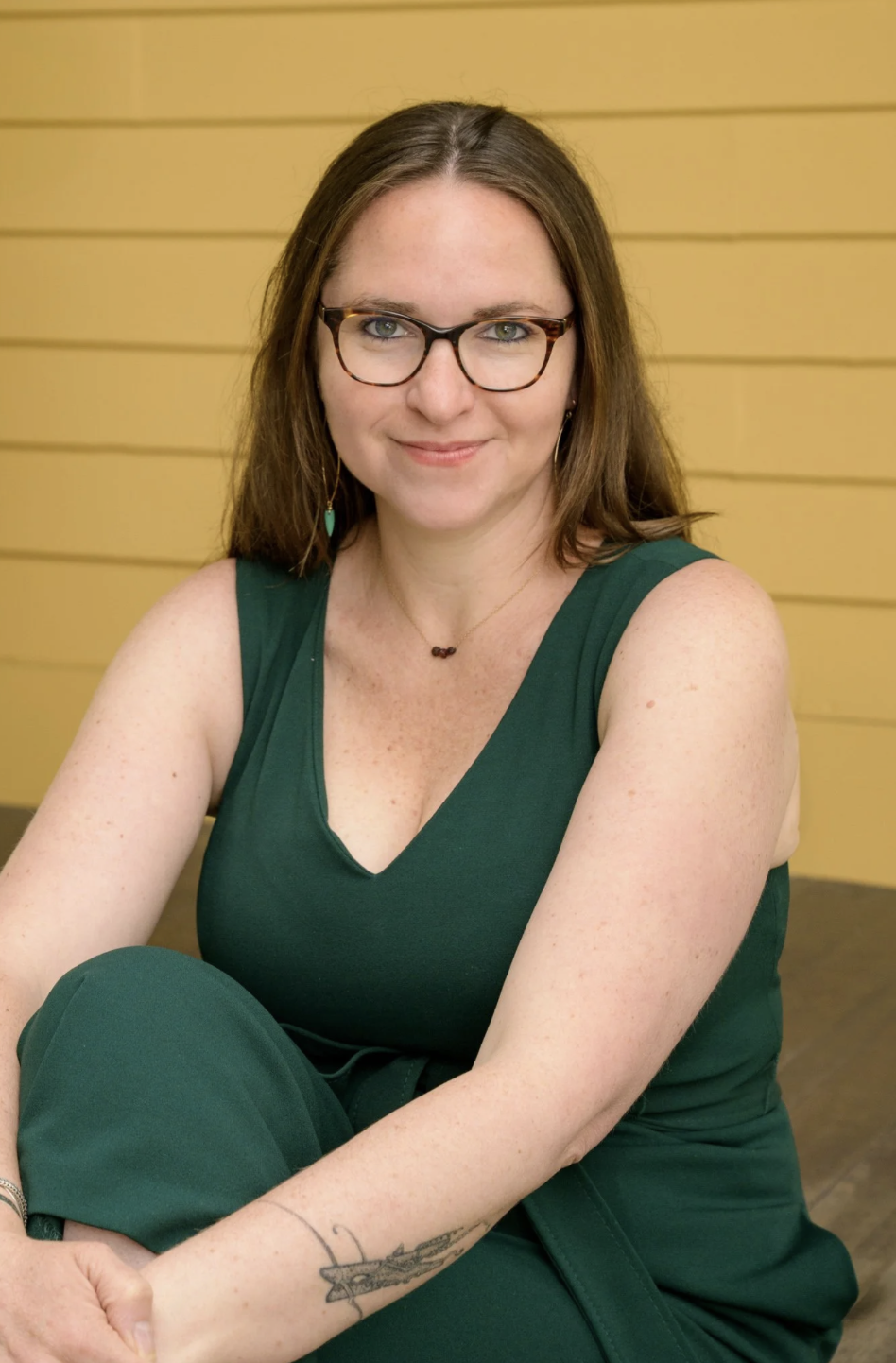
“Sometimes boundaries are messy, but they are rooted in a lot of thought, intention and goodwill.” —Sally Ekus
This episode is your invitation to explore how creativity doesn’t have to be confined to work, it can flow through conversations, routines, parenting, and the ways we show up for others. I’m joined by Sally Ekus, cookbook literary agent, Substack writer, mother, and improv performer who leads who heart, humor, and honesty.
Sally reminds us that creativity can come in many forms: Securing publishing deals for authors she works with, answering questions mid-walk during her “Huff and Puffs,” or performing on the improv stage. She speaks candidly about honoring boundaries, navigating grief, and the gift of community support.
We talk about the emotional intensity of writing a book, the importance of doing your homework, and what it means to be in service to both your clients and your own creations. Sally opens up about the tension between consistency and capacity especially, when it comes to writing her Substack, Not So Secret Agent.
Whether you’re writing a cookbook, considering a Substack, or curious about publishing, this episode offers insight, encouragement, and a peek behind the scenes of the literary world. Bonus: If you’ve ever thought no one cares about your work, let Sally gently prove otherwise.
Listen to the episode on Apple Podcasts and Spotify, or on your favorite podcast platform while you cook, clean, or create. Get the full show notes & transcript below.
Resources Mentioned:
Sally’s Newsletter (including the Huff & Puff chats): Not So Secret Agent
Last chance to take How to Write a Cookbook
Writing a cookbook? Explore Literary Representation with Sally
Questions to Reflect On:
Sit with these questions: Journal, take them on a walk, create a voice note, chat with a friend, or sit with a cup of tea and reflect on them.
Leave a comment on Substack or connect with us on Instagram @chefcarlacontreras & @sallyekus to share your takeaway from the episode.
1. Where are you channeling your creative energy? Are there certain projects that you’re ready to retire? How would freeing up that extra energy support you going forward?
2. How do you capture ideas on the go, even when there is so much going on? What is your process for revisiting or tending to those ideas once you capture them?
3. Do you ever wonder “Does anyone care what I have to say?” How has this question stalled or propelled you forward?
xo Carla
PS: Upgrade to Nourished Creator Studio for quick-hit micro workshops, BTS Podcast, and simple tools to help you work on your creative dreams now, not someday.
Disclaimer: Always seek the counsel of a qualified medical practitioner or other healthcare provider for an individual consultation before making any significant changes to your health, lifestyle, or to answer questions about specific medical conditions. If you are driving or doing an activity that needs your attention, save the energy practice for later. This podcast is for entertainment and information purposes only.
SHARE THE PODCAST
Wherever you are listening, please rate, review + subscribe to Nourishing Creativity. Send the podcast to your friends, post in your stories on Instagram & tag me @chefcarlacontreras

About Sally Ekus
Sally Ekus is a Senior Literary Agent at JVNLA where she spearheads The Ekus Group, a boutique culinary division specializing in cookbook and lifestyle titles. She represents a wide range of culinary, health, wellness, and lifestyle talent, from first-time cookbook authors to chefs, restaurant owners, professional food writers, bloggers, online creators, and journalists.
On the non-culinary side, Sally represents books about caregiving and parenting, and is expanding into select other non-fiction genres. From concept to contract, she has brokered over 300 book deals with top publishers including Penguin Random House, HarperCollins, Hachette, Simon & Schuster, and numerous indie publishers. Sally hosts an online community called How to be a Cookbook Author and writes the Not So Secret Agent newsletter.
Sally loves cooking and conceptualizing new spicy dishes. She is a dedicated supporter and previous board member of The Leukemia and Lymphoma Society New England Chapter and currently sits on the board of Happier Valley Comedy.
She is on the advisory council for The Julia Child Foundation and is an active member of the International Association of Culinary Professionals, Women’s Media Group, The Association of American Literary Agents, and the Cherry Bombe Bombesquad among other organizations. She is a mom, taco lover, and improvisor.
Find + Work With Sally:
Full Transcript:
Carla (00:01):
Welcome to Nourishing Creativity. The cycle of the last few years has left you and me feeling mentally, physically, emotionally and creatively drained. Nourish your very full life through interviews with creatives and entrepreneurs about how they create and move through their creative blocks. If you don't know me, I'm Chef Carla Contreras, a food stylist and content strategist. You can find me Chef Carla Contreras across all social media platforms and more information in today's show notes. Sally, welcome to the podcast. I'm so grateful to have you here. Can you tell me who you are and how you serve your community?
Sally (00:49):
Thank you so much for having me, Carla. I am Sally Ekus. I am a literary agent working with authors to help secure nonfiction book publishing contracts. I'm a mom to a very creative, silly, goofy, curious kiddo. I am an improviser. I'm a taco lover, and I am really looking forward to our conversation today. And I serve my community in a couple different ways. I serve my client community through author advocacy, which means keeping tabs on publishing industry norms and best practices and going to bat for them. Big picture in the work that I do and also every day in an email, a call and a text on their behalf and sometimes D, all of the above. I also serve my community in the cookbook industry world by sharing information and offering some transparency and access to what many people consider a really opaque part of publishing.
(01:56)
And then there's a bunch of ways I serve my local community and my mom and parent and caregiver community and improv community so we can get into all of it today.
Carla (02:04):
What was the last experience that sparked your creativity?
Sally (02:08):
Oh, one of the reasons I was excited to talk today is because you helped me think about my creative process. I don't often find the space or time to really reflect on creativity. And for me, my main source and where I feel most creative is actually not in my professional life. It's in my personal life through my hobby of improv comedy. And usually I am finding the most creative moments and personal surprise and delight in either my rehearsals or shows that I'm in. I'm in a monthly main stage show every month at our theater here in Western Massachusetts.
Carla (02:46):
That's amazing. I had no idea.
Sally (02:49):
Yeah. I'm in a mainstage cast and we perform on the third Saturday of every month at glorious theater called Happier Valley Comedy. We've been performing together for over eight years.
Carla (03:00):
I'm curious of other ways that you bring creativity because I see this on Substack example Huff and Puff. Tell us a little bit about that.
Sally (03:09):
Oh yeah, my Huff and Puffs. Sure. So I like to walk. It's a place that helps me just think differently than when I'm sitting at my desk or I'm on Zoom meetings or on calls. And so I set out to walk every day and sometimes I go on multiple walks. But I'm also like a very type A, maybe overdoing multitasker. And so I started, I was like, I can't just go for a walk alone by myself without doing. I have to always be doing, which that's for therapy, not for our conversation today. So I of course branded my walks for my not so secret agent Substack readers. And I go on what I call Huff and Puffs. I think it's like a paid reader perk where you get a 20 minute chat about publishing or questions somebody's at in their book writing process or marketing.
(03:58)
And so I am literally like outside huffing and puffing along and chatting with somebody working through like questions they have or information they're looking for. And I get very worked up because I get really excited about the things I have to share. And also I really love, this is another way that like taps into my creative brain. I love when people are asking me questions that I can really like personalize the answers to. If I know somebody that somebody doesn't know, I want to connect them. Or if I know of an organization or an event or a place that they should have their work showcase, but they're not in touch with them, I love making those inroads and connections for people. So my huff and puffs are ways for me to just like get out of my day-to-day routine with my clients and offer access and information and like creative problem solving to my readers over on Substack.
Carla (04:48):
Let's talk about the definition of creativity. And I want to get into your work specifically because we've already talked about your life and improv, but how do you get creative when it comes to your work?
Sally (05:03):
So much of my day-to-day working with authors is routine for me. We're going through the book production process together. I'm guiding them on their idea and the proposal or submission. And I find myself saying a version of the same thing to a bunch of different clients. And so when that happens, I take a step back and I think to myself, okay, well, if I'm saying this to clients, imagine what people who are not represented by an agent, how they would feel supported if they heard or had access to some of this information. And so that's often what goes into a post. So for example, I published a post about how to prepare for marketing and publicity kickoff calls. And that came from being on enough of those kickoff calls with my clients where I could see them getting totally overwhelmed with information and not knowing like, what does this really mean?
(05:51)
And so I did a whole post about like how to translate what a publisher's saying. And that's for people who are just looking for information on publishing that may not have access to an agent or even if they're already represented, they're getting another perspective and it hopefully will help inform them in their personal publishing journey.
Carla (06:09):
What is your current relationship with creativity?
Sally (06:12):
Yeah, I'm on the struggle bus. I have no shortage of ideas or even content that is kicking around in my head. My struggle or pain point is carving out time to get it down on a digital piece of paper and shape it up into something remotely helpful and then hit publish. So I feel like my creative energy is there. It's like I work out a lot of what I want to share in my head before I actually start writing it. But for me, it's time and capacity because my first and foremost commitment is to my clients and my work as a full-time literary agent.
Carla (06:46):
And are you connecting with clients through creating content?
Sally (06:51):
Well, I've been on Substack for about a year and a half and it's been interesting. People are now pitching me for representation and they're finding me through what I'm sharing as a writer on Substack. The level of personalization of those pitches to me has increased tenfold since I started sharing this information. And then there are people who have published multiple books and are under representation, like very happy doing what they're doing in their career, but take the time to say how much they appreciate what I'm sharing. And so it's not so much that I'm like looking to sign them or land somebody as one of my clients, but to hear their appreciation for what I'm sharing reflected from a peer or another industry professional is gold for me. I can't even begin to express to everyone how much that means to me that they are like valuing and respecting the work that I'm sharing because that's how I feel about them.
Carla (07:42):
Can you tell us about doing your homework?
Sally (07:44):
Yeah. So people come to be represented by me in a bunch of different ways. Sometimes they are working on a full and finished, near perfect in their eyes proposal, submitting it for representation and I review it. Great, cool. We might work together. But then other times I might meet someone out and about or be introduced to someone who's thinking about writing a book and we have some sort of like meet and greet and then I will give them homework. Next steps, here's what I need to see from you. And there's multiple layers to that. But for me, first and foremost, I'm somebody who I want to make sure our expectations of one another are really aligned and my expectation of my clients is that no matter the timeline, they deliver. They might deliver in weeks, months, years for some people, but we have a mutual respect of our expectations.
(08:30)
And so when I give homework to people, it's like a gut check. Are we going to work well together? What does follow through mean to them? That's broad strokes, the purpose of the homework that I give. And homework could be a bunch of different things. It might be send me two sample recipes. It might be send me six parts of a book proposal. It might just be like, touch base with me in a few weeks and let me know how this conversation sat with you.
Carla (08:56):
And tell me about boundaries.
Sally (08:58):
I'm always trying to strike the line about boundaries and like the line between personal and professional. And when I post something that would be considered personal, like my dad passed away at the end of the summer, it's very hard for me to show up online with a post about publishing without acknowledging what's going on for me behind the scenes. I'm just not that person. And so I felt like this creative bottleneck of how do I get this next post out while I'm personally going through a very intense time in my life. And so what boundaries look like to me are first just like negotiating that in my head and being honest with myself and then deciding, okay, knowing that I have this community of people that have come to really care about me as a person, like a human lens and also a professional lens, how do I strike the balance of being honest with my readers and my community while also still sharing information that I genuinely want to share?
(09:54)
Sometimes the boundaries are messy, but they are rooted in a lot of thought, intention, and goodwill.
Carla (10:02):
Tell us about your creative process. And I'd love to get a glimpse inside the course.
Sally (10:08):
Sure. So before the pandemic, we had started running workshops for people who wanted to write cookbooks and we had hosted some in person. And when the pandemic happened, we transitioned to virtual. And then out of that grew a creative pull to create content in a course that people could take at their own pace that was like still a lot of me in my information sharing, but at their own pace. So I created a class online called How to Write a Cookbook. It is just jam packed with what I consider high value information about writing cookbooks and if somebody should self-publish or traditionally publish and how publishing works. And I give a bunch of case studies about the business of publishing a book and at different advances and how to hit the best seller list, the case studies are a little out of date and the publishing information is like 95% accurate.
(11:05)
It's just a bit outdated. And so actually I'm an agent. I'm not a course creator. So like I also didn't know about like funnels and marketing and sales. Like many naive content creators that I have talked to, I just thought like I'd create a great thing and people would find it on their own and it would do what it needed to do, but jokes on me and also I'm so proud of it and I'm taking it down. So I'm going to pay for it to be hosted on its hosting platform for 2026 and then it's gone. And so for people who are like, I want to learn everything there is to learn from Sally that's out there beyond the like real time workshops that I do, you got one year to take it and then it's going to be gone. I stand by all the content.
(11:50)
I'm very proud of it. And it fueled a creative side of me that in the end, I think facilitated what I now am invested in, which is the Substack in my newsletter. And so it like really kind of kickstarted a type of my creative process and educational content and sharing that was like there and smoldering, but laying dormant in a way that I'm so grateful for and also ready to evolve.
Carla (12:14):
I'm excited for you.
Sally (12:15):
Thanks. Yeah. I'm actually really proud of the fact that I'm going to make it not available anymore. I know if that sounds weird, but I feel like the course has served those that it will serve between now and the end of 2026. And then there's some fun things that I have cooking up beyond that.
Carla (12:30):
I can't wait. Let's talk about creative blocks. I know that shifting ideas, control, all of these different things come into play in the creative process when it comes to creating a book.
Sally (12:47):
The creative process when you're making a book is a really emotionally charged one. And so what I see happen for clients or people in general is like, sometimes they see a book cover or they see the initial design of their book and they're like, "I don't like it. " And they have this big emotional gut reaction. You're like, "Okay, that's fair. That's valid." It's hard to just love something right out of the gate, especially after you've been like deep in the content of it for so long and working on the manuscript or the recipes or whatever the writing might be. And so I find that the blocks for people can happen when their gut reaction is to just like immediately follow that moment as opposed to like sit with it and go through their process. Most of my clients are very mature, emotionally intelligent humans who have done work in other areas of their life to be able to show up as their best selves.
(13:41)
And so I want to bring that to the book writing process too where like, "Okay, we have a moment where we don't like something. Cool.What's our coping process? What are the skills that we call upon when we're having a fight with our partner or our car breaks down?" We pause and we implement some of those things. And so I find that reminding authors of those coping skills throughout the book process, that's the area of impact I have as an agent. Can't really help with the car breaking down, but I can help with the book cover.
Carla (14:13):
And what is it about Creative Blocks when it comes to your own work? Example, publishing on Substack regularly, writing your notes, doing all the things.
Sally (14:25):
Yeah, it's so much. Like I said, for me, it really comes down to time. That's a creative block for me because I can get so excited about something that I want to share and write about. And then it might take a week and a half for me to actually have the capacity to sit down and write it out. But I do go on walks and I'll kind of like write or draft it in my head. And for the most part, the way I talk is the way that I write. And so if I write it out in my head, that can be a fairly helpful part of the process. Another creative block for me is, is going to sound ironic because I work with authors, so I feel weird being a little bit on the other side of it, but just like, does anyone want to hear what I have to say?
(15:03)
There are other amazing agents and publishing experts on Substack and other newsletter platforms putting out a super helpful posts and I'm like, "Great, they covered this. I don't need to. " But then sometimes I'll have something that either my perspective on it feels like it could be valuable or I just have a lot to say. And so I'm like, "Well, I'll share it to see if it lands with anyone."
Carla (15:24):
And it does because I read your comments.
Sally (15:27):
Thank you. It's been amazing to create a community of people who are interested in hearing my perspective on book publishing. I mean, I've been very blessed with mentors and colleagues since the jump of my career. And so I just feel like so lucky to have had access to that right away. And so giving back is really important to me. I should also just note on that as an agent, I think writers should be paid for their work. And also the ethos of my newsletter is that the post, the content that itself is never paywalled. So my paid readership are people that are supporting and saying like, "Thank you. I find that there's value in this. " And only in the past few months have I started crafting very specific, intentional rooms of access and networking for people. And I offer equity spots for access into those spaces.
(16:19)
The paywall to that is really to help people decide, yes, I'm ready to invest in that and create a little bit more curation, but transparency and access to the information and the network that I've created is incredibly important to me and that will never be paid well. And if anybody's listening and is like, "I'm not sure, I would just love to access those benefits," just send me an email and I always have equity spots available.
Carla (16:43):
Thank you for doing that and creating that space for people.
Sally (16:46):
You're welcome. It's like a no-brainer to me and it's something that I'm able to do and I recognize that not everyone is in a position to do that.
Carla (16:52):
Sally, how can we find you? How can we work with you? How can we support you?
Sally (16:56):
I am so grateful for our conversation today. The primary way to dig into what we talked about is over on Substack. I write a Substack called Not So Secret Agent, and it's a place where I write about nonfiction publishing through the lens of my expertise as a cookbook agent. And you can also find me on Instagram and a bunch of other places, but those are the two primary ways to engage with my work and support it. And if you're interested in formal representation, I have proposal guidelines through our submission page on the agency website, which is jvianla.com.
Carla (17:32):
Thanks so much for tuning in to Nourishing Creativity. You can find me chef Carla Contreras across all social media platforms and more information in today's show notes. While you have your phone out, please leave a review on iTunes or Spotify. This is how others find this show. I really appreciate your support, sending you and yours so much love.