Episode 122: The Art of Showing Up: Creativity, Visibility, and Camera Confidence with Lisa Haukom
Podcast
Episode 122: The Art of Showing Up: Creativity, Visibility, and Camera Confidence with Lisa Haukom
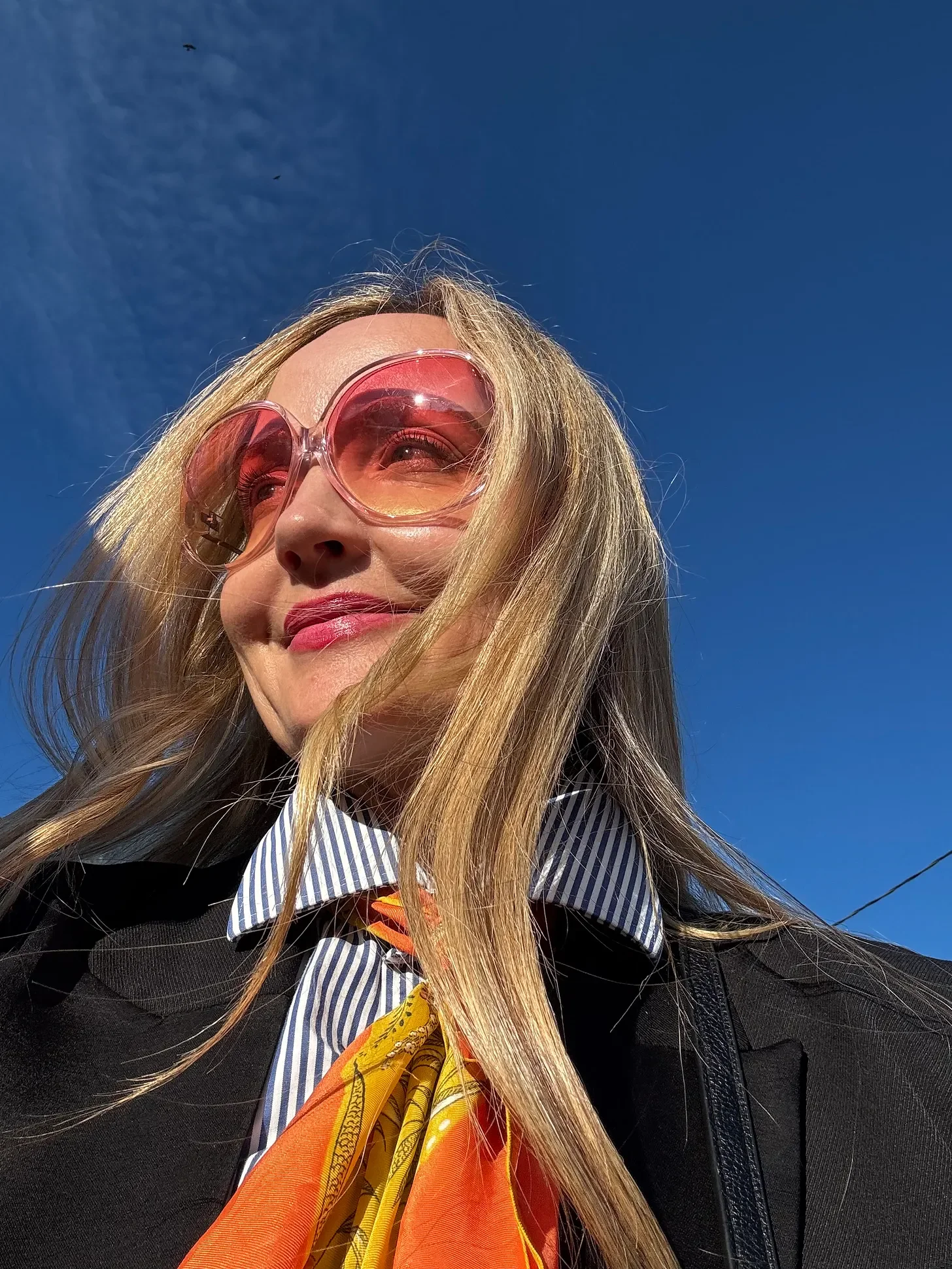
"There's a difference between getting stuck in research mode and waiting for somebody to tell you that you're gonna be good at the thing." — Lisa Haukom
This episode is your invitation to explore whether you’re navigating visibility, or craving a creative reset this conversation is full of grounded wisdom. I’m joined by content partner, photographer, and founder of The Golden Brand, Lisa Haukom.
Lisa shares her innovative approach to remote photography that feels natural, honest, and deeply personal. She walks us through her process, where clients forget about the camera, settle into their own space, and leave with photos that feel like themselves.
We also dive into the origins of Photo Club, Lisa opens up about her own self-portrait practice and how it helped her confront body image challenges, helped her develop empathy, and became the foundation for helping others feel seen and comfortable on camera through self-portrait challenges.
Whether you’re navigating visibility, or craving a creative reset, this conversation is full of grounded wisdom. Lisa reminds us that when we stop hiding our ideas, allow ourselves to receive support, and let others witness our work, creativity becomes more impactful, easeful, and sustainable.
Listen to the episode on Apple Podcasts and Spotify, or on your favorite podcast platform while you cook, clean, or create. Get the full show notes & transcript here.
Questions to Reflect On:
Sit with these questions: Journal, take them on a walk, create a voice note, chat with a friend, or sit with a cup of tea and reflect on them.
1. What universal imperatives am I most longing for right now? Examples: safety, love, worthiness, belonging, freedom…
2. When do I say “I’m fine” when I’m actually not? Explore how people-pleasing or fawning shows up and how it impacts your creative voice.
3. How do I nourish my creativity on a nervous system level? Examples: Sleep, nature, movement, somatic practices—what works for me and what’s missing?
Leave a comment on Substack or connect with us on Instagram @chefcarlacontreras & @thegoldenbrandco to share your takeaway from the episode.
xo Carla
PS: Upgrade to Nourished Creator Studio for quick-hit micro workshops, BTS Podcast, and simple tools to help you work on your creative dreams now, not someday.
Disclaimer: Always seek the counsel of a qualified medical practitioner or other healthcare provider for an individual consultation before making any significant changes to your health, lifestyle, or to answer questions about specific medical conditions. If you are driving or doing an activity that needs your attention, save the energy practice for later. This podcast is for entertainment and information purposes only.
SHARE THE PODCAST
Wherever you are listening, please rate, review + subscribe to Nourishing Creativity. Send the podcast to your friends, post in your stories on Instagram & tag me @chefcarlacontreras
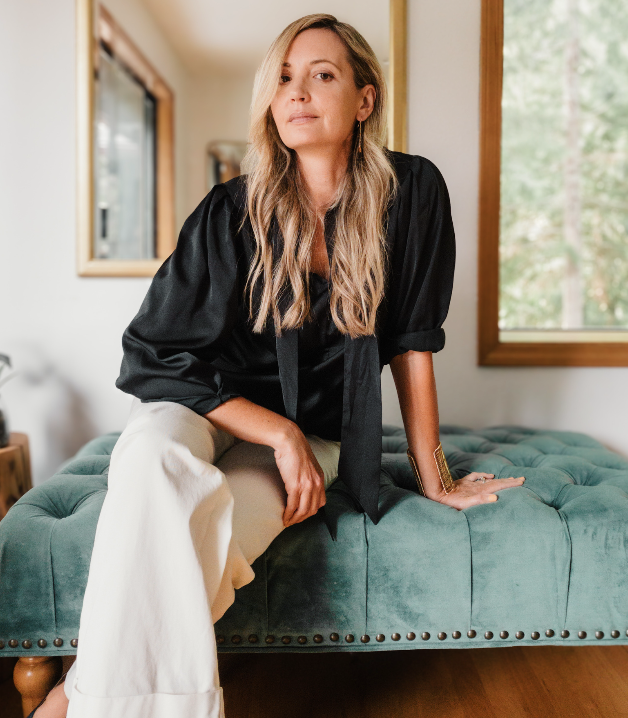
Lisa Haukom
Lisa Haukom is a creative director, content partner, and photographer. As the founder of The Goldenbrand and Photo Club, Lisa has helped countless women define their personal brands, craft a presence that actually feels like them, and show up powerfully in their work and their lives. Known for her intuitive approach, she guides clients to the kind of clarity and confidence that makes their visibility sustainable and magnetic.
Lisa pioneered the now widely adopted method of remote photography, using only an iPhone and her signature eye to help clients around the world tell their stories visually. But her genius goes far beyond the lens: through her creative direction, editorial sensibility, and signature method No Bad Photos, Lisa teaches women to shift their complicated relationship with the mirror.
She is also the writer behind I Would Never Gatekeep This, a fast-growing Substack where she shares unfiltered essays, creative tools, and visibility insights. Her forthcoming book, Women by Women, explores identity, self-perception, and the art of becoming yourself at every age.
Her work and home have been featured in Better Homes & Gardens, Cottages and Bungalows, Sunset Magazine, Oregon Home, and the forthcoming fall issue of Where Women Create. She lives in the Pacific Northwest with her family.
Find + Work With Lisa:
Full Transcript:
Carla (00:01):
Welcome to Nourishing Creativity. The cycle of the last few years has left you and me feeling mentally, physically, emotionally, and creatively drained, nourish your very full life through interviews with creatives and entrepreneurs about how they create and move through their creative blocks. If you don't know me, I'm Chef Carla Contreras, a food stylist and content strategist. You can find me, chef Carla Contreras, across all social media platforms and more information in today's show notes. Lisa, welcome to the podcast. I am so grateful to have you here. Can you introduce yourself and how you serve your community?
Lisa (00:49):
Yes. Well, first of all, I'm so happy that we're finally doing this. I'm Lisa Ockham. I'm the founder of the Golden Brand and Photo Club, and I am a content partner, creative director and photographer.
Carla (01:04):
What was the last experience that sparked creativity for you?
Lisa (01:09):
The last experience that sparked creativity was finally admitting to myself the thing that I'd wanted to do the whole time and letting myself do it. And that was taking a newsletter that I had sent out once a week called Sunday Stories to my email subscribers for about four years. And it was a combination of a personal essay, a mood board, sometimes there'd be a little exercise for them in it. There was always beautiful imagery. And then I would share recommendations or favorites or things from the internet that I was into. And I did that every single week and I was an early adopter of Pinterest, so I was able to grow that email list to about 7,000. And I have to tell you, I loved sending that weekly newsletter. It also fed my ego to be able to have a list that size that was private and all mine and that wanted to hear from me on a weekly basis.
(02:08)
I had also, about a year ago, launched my substack, which is a public facing publication called I Would Never Gate Keep This from You. And I have a paid tier and a free tier, and I have a private membership community called Photo Club that I mentioned earlier. So what I came to realize was I essentially had three different editorial outlets where I was splitting my time and my best content was being kept in containers where I was not able to have the ripple effect that I was looking for with the content I was creating. So I think email is great, but it doesn't allow for back and forth conversation. It doesn't allow for strategic growth. So me sending that Sunday Stories newsletter to the email list every week was great. It was nurturing people, it was getting new people on the list, but it wasn't doing anything to further my brand and I was starting to feel walled in by it.
(03:06)
So I made the announcement just last week. I took myself through an entire strategic process to diagnose what I was going to do with each outlet, how I was going to move forward, how I was going to make the announcement, what was working, what wasn't. And I just shared with them, this is the move. It's all moving to Substack, it's all going to be public. And I invited them to join me over there and I have not been able to stop making. I can show you these little wonderful vertical strips of paper with all my ideas for what is now downloading and channeling through to be able to share to substack and not having to compartmentalize everything. It's like this uncorking of creativity.
Carla (03:52):
How do you define creativity when it comes to your work? And I want to ask this through the lens of being a high achiever and perfectionism because this is something that is a thread through my work as well. And we both have a chef background, and I'd love to explore this.
Lisa (04:16):
I'm going to be really honest because I had to acknowledge that I was a perfectionist and what that means, and it doesn't necessarily mean what you think it means from reading Instagram posts. It means that you have high expectations of yourself and probably hopefully, actually I'm going to say hopefully for other people as well, wanting to put something out that wasn't perfect necessarily or aesthetic. That wasn't really my priority. It was more I wanted it to be meaningful and I wanted it to affect change, feeling action, transformation in someone else, whether that was eating my food, looking at a photo that I took of a woman whose eyes were just expressing her purest emotion or just something that gave them those full body goosebumps. That was my expectation for my work. And so acknowledging that my expectations were a lot higher than how people were actually processing it.
(05:18)
I might think that I missed the mark, but people were just completely blown away. And I was producing these things so quickly and at this level that my audience was almost choking on it. They were like, just give us a minute to absorb it all. And for me to realize that I was having that effect on people really softened the way that I was treating my own expectations or my own critique of that high achieving perfectionism. Now I am still very much that person, and I'm never going to try to not be someone like that. It's what makes me so good at what I do and working with the people that need the action and they need that energy and momentum. But being able to transfer that to my clients has been something that has been really, really, really satisfying for me.
Carla (06:10):
And do you think that time in the professional kitchen also for me personally, that adds to it? Anybody who's watched the bear understands what it's like to be in a kitchen?
Lisa (06:22):
Yeah, I have PTSD when I watch the bear, I love it so much, but also my chest is just thrumming, and I'm pretty sure that my burn scars are thrumming too because I have
Carla (06:33):
Them too,
Lisa (06:34):
Right? The sheet pan scars.
Carla (06:36):
Yep.
Lisa (06:36):
I mean, you don't stop and take care of yourself. You have to keep moving.
Carla (06:40):
No,
Lisa (06:40):
And if you stop, then it creates problems for everyone else. It's like military precision in the kitchen. I actually was very, very burnt out from my experience working in commercial kitchens, and it took me a long time to come back to really enjoying feeding people again. And it's only been in the last few years that I've been able to enjoy cooking and baking just for creativity, just for the sheer joy of creating something with my physical hands. But the stress from that is real.
Carla (07:15):
What is your current relationship with creativity?
Lisa (07:19):
My relationship with creativity, we have this conversation of, okay, that's an idea that you have. That's something that you want to explore. Now what do you really want to do? Because if I'm feeling blocked, and I mean honestly, I am going to be a little controversial here. I don't believe in creative blocks. I think a block is there because you're doing something that you don't actually want to do. So if you can take a minute, and maybe for some people it's waiting for inspiration, but nine times out of 10 for me, that inspiration is the thing I actually really want to do and not these 10 other fricking things that I'm doing instead, because I feel like I must before I can get to the meat of the thing I want to do, once I can identify that thing, it is really just this creative explosion. The same thing happens with my clients too. They're like, wait, I can just do this part. I'm like, yeah, of course you can. In fact, if you work on that part, then all this other stuff that had you stuck is going to be, you're going to look behind you and go, oh, that was so easy. Now that I've done, I've given myself the treat of doing the thing I really want to do.
Carla (08:31):
And this leads into your creative process or what I like to say nourishing creativity. And I'm really curious about your remote shoots.
Lisa (08:42):
One thing about me is I love a challenge and I love momentum. So for me, growth is momentum. Momentum is growth. There's movement forward, there's a solving of something. So I mean, I'm the type of person that if we're stuck somewhere with a flat tire, it's then adventure. Like what are we going to do with this moment that we have here? Well, we're waiting for the tow truck. How fun could this moment be? So when the pandemic hit and I couldn't shoot with my clients in person, and they still needed photos actually more than ever because a lot of them were brick and mortar and they needed photography so that they could have their first website ever and still make money and support their families. So I'm like, well, we can figure this out. So I started taking people's photos through Zoom, what we had, and they were actually really good.
(09:33)
I mean, they're actually really, really good. And it was just the annoying Zoom logo that you would get when you would screenshot the thing, and I'd have to airbrush that out. But then later on, technology caught up and there were a number of virtual studios. So I tested a whole bunch of them out. And then I put a lot of time into my pre-shoot process, which is where the value is, because it's in that prep of your client. And again, something I said earlier, getting to what they actually want, what they want these photos to be, and then allowing them to be a really juicy, best version of themselves for the photo, they were like anti branding photos. We weren't going to a studio, we weren't going to wear white. We weren't going to do the whole thing, but we were going to wear what they would normally wear.
(10:21)
And then we were shooting in their home. And with one of these apps, they actually can't see me and they don't have a camera pointed in their face, so they forget they're being photographed. So we're just talking, we're just sharing recipes, we're telling funny stories, we're talking about their dog, and I'm shooting the most natural photos that they can't even believe it. And then I get the photos and I edit 'em and send them back. And I didn't know that I would keep using the process after we could get back together in person, but I found it works really, really well for a specific type of, again, creative person whose home, whose art studio, whose sense of place is very much part of them and their brand. And I tell you, when somebody's comfortable in their space and they can really open up and be themselves, then those photos are a more accurate representation of who they are. And this is key. They're going to want to use the photos. Nothing worse than getting a photo shoot where you now can't post anything else in your feed because nothing is as good as the photos you just had taken, but they're already in your space. So it's not so jarring seeing somebody go from the studio into what their home or kitchen or whatever actually looks like. So figuring it out and making it work in innovating and getting movement and traction with that is a massive part of my creative drive and process.
Carla (11:56):
And do you teach people in photo club how to do this?
Lisa (12:01):
I do because in order for me to go online and tell everybody that I had these things, I had to come to terms with the fact that I was very uncomfortable on camera myself and I didn't like the way that I looked and I would pick myself apart and say all the things that we say to ourselves. So again, my creative process, by the way, I tried therapy, I had tried all kinds of things to try to heal what I'm doing. Air quotes here, it was wrong with my body image and my complicated relationship with my face. So I grabbed the tool that I had left, I grabbed my camera and I took self portraits of myself for 30 days. And it's creative. It was also really confronting, but part of that was to make myself actually look at the photos and look at myself and the defenses and the fear of what I thought I was going to see there or the fear of what I didn't want other people to see there started to melt away.
(13:01)
The more that I sat and looked at my own photos and what replaced it was empathy and this great grief and sadness that I had missed out on so much by not doing this earlier. And it's a difficult process to do, but I do believe that is the thing that gave me the most peace of mind in being able to get my message across and talk to people and not be in my own head while I'm having those experiences. And so the women that come in photo club, they go through that 30 day process in the form of a six week challenge where I give them a specific prompt to interpret in their own creative way in front of the camera. Everybody does this differently. It's so fun to see everybody's interpretation and while they do the prompts, they're paying attention to how they feel during the taking of the photo, but they're also learning photography skills secondhand as they go through this.
(13:59)
And then part of their process is to sit and look at their own photos and then later they learned to edit and then now they're just, in fact, I was scrolling this morning and I was like, there's new photos in their bio. I love it. And somebody's just posted new photos that they clearly shot themselves, and it's just like this is how it is supposed to be. This is the skill that none of us were ever given, but this is how it's supposed to be. And especially for people that don't resonate with creativity or being a creative, there is some nugget of something that you do that is creative and it may not be painting and all the things that people always pull out as the standard examples of creativity. You could be a creative thinker, you could be a creative problem solver. There's a lot of ways for that to come forward, all valid, and it's all creative. I love the moment somebody realizes they're creative for the first time. They're like, oh no. Oh me. Yeah, it's great. It's such a gift.
Carla (15:03):
That's awesome. You've had many iterations of your career and I'm curious of how you move forward with ideas that, especially in my experience in working with people, usually people get stuck and tripped up on research or thinking, but you move ahead. Momentum is one of your things.
Lisa (15:27):
It wasn't always that way. I mean, I've accepted that I have something to say and that it's valid and it's different than what other people are saying. And because of that, I'll figure out different ways to get that out into the world. Now, I'm not invincible. There's still some things that I'm intimidated by and I've had a learning curve with as well, like writing this book and pitching this book and approaching people to be interested. I mean, that is a whole different mindset game, but I'm doing it and I'm figuring it out. There's a difference between getting stuck in research mode and waiting for somebody to tell you that you're going to be good at the thing or it's wanted or needed or validating you. And you've got to figure out, and I say this with so much love, but you've got to figure out how to validate yourself.
(16:17)
And one of the best ways to do it is to just start talking to everybody about the thing that you are thinking of doing before you do anything with it. That's what I started doing with the book. I stopped keeping it a secret first of all, and thinking that I'm going to get the secret Book deal and then I'll just give my audience the book how everyone else who's put a book out in the world makes it look like it actually happens. And then I realized, no, no, no, I'm going to work less. I'm going to push on this less and I'm just going to have conversations and I'm going to tell everybody I've got this book. This is the thing. And what's been happening is amazing. People are saying, let me introduce you to my friend, or Do you know this publisher? Do you know this other writer? And we're talking about our journeys together. So practicing it by speaking it and try it on, you're going to try on a new dress and the more that you put it on and take it off, the easier it becomes to actually move to the thing.
Carla (17:17):
And what I hear is allowing people to support that in coming into the world,
Lisa (17:25):
Allowing yourself to receive is, I really don't want to say the phrase for women. I really don't, but insert there. I think allowing yourself to receive and not feeling like your only value is to give is a very important lesson to learn and understanding that nobody's going to give you what they don't want to give you. So if somebody would like to give you the gift of a connection or the exact solution you need for the thing that you're looking for or an easier pathway, then receive it. It's meant for you. You did the hard thing about, you've already said it. You took that step of telling somebody. And your reward or your gift back is for them to say, I have something I can give you. And I'm sure you're the type of person that does that for other people as well. But don't become one of those places where it gets you get empty because you're only letting it happen one way. Then it's just a different form of control and fear. You got to let yourself receive.
Carla (18:33):
This has been a gift. Lisa, can you tell us how we can find you, how we can work with you? How can we support you?
Lisa (18:40):
Yes. Okay. So first of all, the remote photography. This is such a big deal. There's a magazine called What Women Create, and they are doing a gorgeous, beautiful feature of my remote photography. I wrote the article, it's photos I've taken remotely, and I'm telling you all the juicy stuff and how it works on both sides of the camera and come find me on Instagram. I'm super friendly. So voice message me, send me dms, all the things at the Golden Brand Co. And I'm on Substack is I would never keep this from you is the name of my publication.
Carla (19:15):
Thanks so much for tuning in to Nourishing Creativity. You can find me Chef Carla Contreras, across all social media platforms and more information in today's show notes. While you have your phone out, please leave a review on iTunes or Spotify. This is how others find this show. I really appreciate your support sending you and yours so much love.