Episode 125: Do You Really Want to Write a Book? The Truth About the Nonfiction Writing Process with Caroline Malloy
Podcast
Episode 125: Do You Really Want to Write a Book? The Truth About the Nonfiction Writing Process with Caroline Malloy
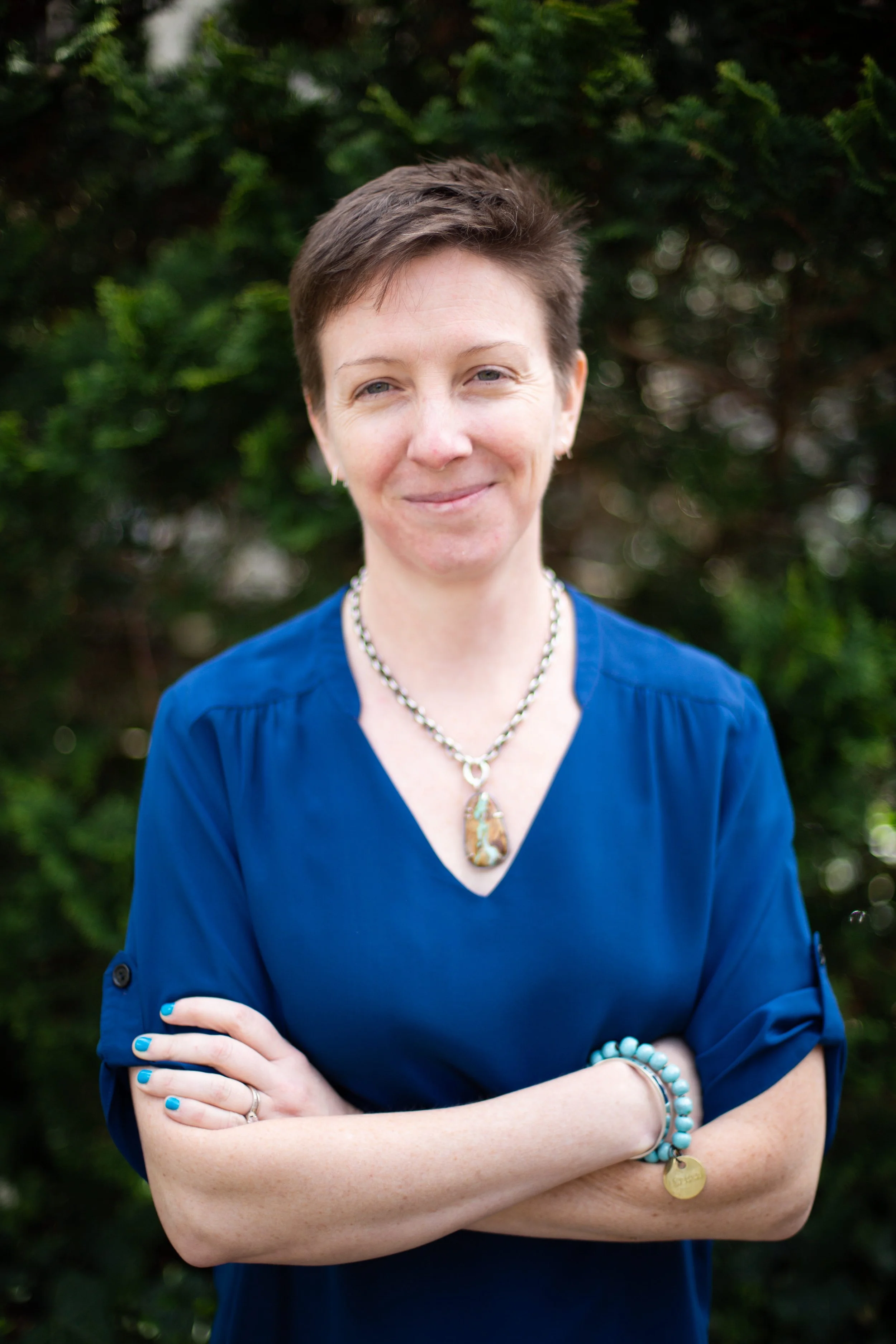
“Writing isn’t just about getting words on the page, it’s about finding a way to express what your day-to-day self can’t always say out loud.” — Caroline Malloy
This episode asks you the question, do you really want to write a book? I’m joined by Caroline Malloy, a Chicago-based book coach, editor, and historian. Together, we explore what it takes to move from idea to manuscript and why not every idea needs to become a book.
Caroline explains why trying to write for “everyone” dilutes your message and how staying deeply rooted in one specific reader makes your work more powerful and widely relatable. She also unpacks a causal, page-turning narrative that keeps readers engaged.
If you feel stuck in your writing or creative work, Caroline offers practical wisdom: Sometimes the most productive thing to do is walk away. You can also shift your focus and work on different parts of a project to maintain joy and creative flow.
Whether you’re writing a book or deepening your creative practice this episode will remind you that creativity thrives when it’s supported by the right people, those who help you shape your ideas, stay accountable, and bring them to fruition.
Listen to the episode on Apple Podcasts and Spotify, or on your favorite podcast platform while you cook, clean, or create. Get the full show notes & transcript below.
Questions to Reflect On:
Sit with these questions: Journal, take them on a walk, create a voice note, chat with a friend, or sit with a cup of tea and reflect on them. Leave a comment below or connect with us on Instagram @chefcarlacontreras & @thewritemalloy to share your takeaway from the episode.
1. What narrative are you building in your life right now? What story are you telling?
2. If this season of your life was a chapter in a book, what would the title be?
3. When was the last time you walked away from a project to take some space so you can circle back with a new perspective? How did taking that space benefit the project and your mindset?
Listen to the episode on Apple Podcasts and Spotify, or on your favorite podcast platform while you cook, clean, or create. Get the full show notes & transcript below.
xo Carla
PS: Upgrade to Nourished Creator Studio for quick-hit micro workshops, BTS Podcast, and simple tools to help you work on your creative dreams now, not someday.
Disclaimer: Always seek the counsel of a qualified medical practitioner or other healthcare provider for an individual consultation before making any significant changes to your health, lifestyle, or to answer questions about specific medical conditions. If you are driving or doing an activity that needs your attention, save the energy practice for later. This podcast is for entertainment and information purposes only. Note: Some of these are affiliate links. I receive a small percentage of the sales. I appreciate your support of my small Latinx & women owned business.
SHARE THE PODCAST
Wherever you are listening, please rate, review + subscribe to Nourishing Creativity. Send the podcast to your friends, post in your stories on Instagram & tag me @chefcarlacontreras
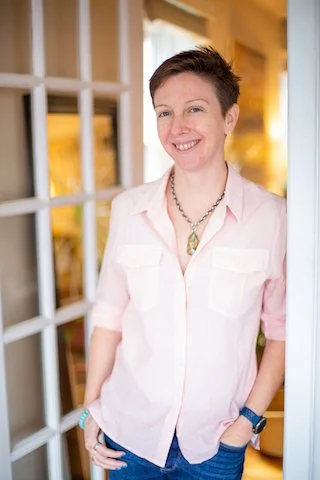
Caroline Malloy
Caroline Malloy, Ph.D., is a Chicago-based book coach, editor, and historian who helps great women write great nonfiction. She supports over-achieving thought-, industry-, and scholar-leaders write their nonfiction books through reliable strategies and honest guidance.
As a historian-turned-book coach for bold women with a story to tell, and the power to tell it, Caroline helps women craft book ideas, draft book proposals, pitch agents and publishers, and write all the way to the last page. She's committed to supporting women nonfiction writers so there's more of them on her shelves and yours! Together, we are changing whose voices are read, respected, referenced, and literally printed on the page.
Caroline has spoken on coaching and editing at national conferences and is the author of the chapter on book coaching in The Art of Academic Editing: A Guide for Authors and Editors (Flatpage, 2024). Along with coaching amazing writers, Caroline travels as a Resident Historian with Viking Ocean cruises, coaches indoor cycling, and reads books on her front porch alongside her husband, Steve, and their pandemic puppy, Emma.
Find + Work With Caroline Malloy
Full Transcript:
Carla (00:01):
Welcome to Nourishing Creativity. The cycle of the last few years has left you and me feeling mentally, physically, emotionally, and creatively drained, nourish your very full life through interviews with creatives and entrepreneurs about how they create and move through their creative blocks. If you don't know me, I'm Chef Carla Contreras, a food stylist and content strategist. You can find me, chef Carla Contreras, across all social media platforms and more information in today's show notes. Caroline, I'm so excited to have you on the podcast. Can you introduce yourself and how you serve your community?
Caroline (00:48):
Thanks, Carla. I am thrilled to be here. I am a book coach. I help women who are writing nonfiction find their voices in their books and get their books out of their heads onto the page and into your hands.
Carla (01:01):
It's amazing the process that goes on, and we've had several conversations of what this looks like, so I can't wait to get into the podcast. I'm going to ask you a food question before we start. What was your last meal?
Caroline (01:15):
So it was very exciting for me. I've been traveling for the last month and I just got home, and so my last meal was actually dinner that my husband made last night. That was dinner that my husband made last night. It was grilled chicken that was just perfect and in my backyard, and he made a pasta salad That was basically what I will be living on until I have eaten all of it. It was amazing. It had arugula and avocado and tomatoes and lemon vinegarette dressing on it, and then some broccoli to go with it. I mean, it wasn't fancy, but it was definitely a kind of meal made with love and absolutely perfect dinner last night.
Carla (01:57):
This sounds so delicious. And you travel for work as well?
Caroline (02:01):
Yeah, so I am a coach. I work with writers, but the nice part, kind of like this podcast is that I can work with writers and talk to writers and edit manuscripts anywhere in the world. So in my past life, I was a history professor. I have a PhD in history and I still spend a month or two every year playing historian as a resident historian with a cruise line. So I spent the month of May, I flew to Istanbul and I basically hugged the coast of Europe and just flew home yesterday from Barcelona and working with writers the whole time. So it's great.
Carla (02:32):
Wow. And you can just bring your laptop.
Caroline (02:36):
Yeah, exactly.
Carla (02:36):
All you need is wifi.
Caroline (02:38):
Yeah,
Carla (02:38):
It's amazing. We're going to get into creativity, and I am excited about asking you this big question of how do you define creativity?
Caroline (02:50):
What I like about creativity as a term is that it can encompass so many different outputs and a lot of ways creativity is what you make of it. Creativity is how you feel you want or need to express yourself, right, because as I think about that, I'd say you need to, but no, I mean, you could want to be creative. I actually have an editing colleague who is all about ugly art. It's a want, it's a, let me just express, it's that want or need to be creative and finding the thing that resonates with you to do it. I don't know. I feel like that's a really weird definition, but creativity is that thing. You're like, I just need to express myself differently than my daily life differently from my routine. And it's not to say that you can't build creativity into your routine, but I feel like it always comes from a place of addition, not limitation, I dunno.
Carla (03:43):
Well, I can pull this and let me pull this from your coaching maybe is people come to you in order to get something on the page and is that their way to express that creativity? Whether it's a book, and we've talked about this, whether it's a course, it might evolve into something else, and I love when we had this pre podcast conversation that we talked about. Books can become other things.
Caroline (04:16):
So I mean, from a writing perspective, writing is creativity and we can all just generally sit down and agree with that. Even people who write white papers or business plans for a living, I mean, there's a creative aspect to that. Yeah, books definitely can become other things. Writers come to me and one of the hurdles, interestingly, one of the hurdles that I encounter with writers is that a lot of them are struggling to turn on the creative side of their writing because I work with nonfiction writers, and so it's like it has to be serious. It's like, no, no, this is creative. This is tell a story. This is build a narrative. The number of writers, Carla that I work with who are like, I'm a nonfiction writer, I don't tell stories, and I'm like, no, no, no, no. You are telling a story and this story gets to be bigger than you.
(05:02)
It can be any number of things. I mean, we work on figuring out that story is, and I think to the point that you just brought up, some of the writers I work with, we figure out the story and then they say, you know what? The story isn't a book right now. The story is a podcast. The story is a course. The story is a workshop that I'm building, but they take the story that we figured out together and basically that creative thing, that process that allowed them to step away from the seriousness of the nonfiction idea into the creative space of story and narrative and recognize how plastic that is and how fluid it can be in so many aspects of their lives.
Carla (05:41):
I'm so curious about how you nourish your creativity, and I want to put a parentheses, what's your creative process? What does that process look like for your clients? Because it seems like there's a bigger process that's happening.
Caroline (05:59):
So my creative process versus my client's creative process is different. I am definitely a do what I say, not what I do person. My creative process personally is to talk until I talk myself at an answer. I'm an extrovert by nature, unlike I find a lot of editors and book coaches. We tend to be people who are comfortable and it's behind our computers. I'm not. I'm going to talk all day long and I would rather do that and I will keep talking and keep talking. And my writers that I work with are, I think that's kind of my thing. I'm going to just talk around ideas until we land where we need to be. That being said, my work with writers is to say, Hey, stop wandering down various pathways. Stop pulling on every possible thread. We actually need to organize your process and put some steps in place to get to that full circle experience so that you have this thing that you can take and play. Because again, nonfiction, my writers love doing research and finding out more things and the next thing and the next thing, I'm like, say a fiction writer who's like, all right, I just need the story to move. And so my job as a coach is to actually sometimes pump the brakes on that research on those threads and to bring everybody back in. But like I said, personally, I go down research rabbit holes and I keep talking and I never come to a conclusion. So as I say, not as I do. Definitely.
Carla (07:29):
And there is also a component where you're extroverted in a way where you do your spin classes too. That's another avenue.
Caroline (07:39):
Basically everything that I do is some version of telling people what they should do, and sometimes I'm louder about it. My spin classes are very loud. Sometimes I am quieter about it. I like to think that I am a calmer, quieter coach. I used to be a teacher. Like I said, I'm a historian now on a cruise line where I get up in front of a room of 300 people and give a talk and chat, and my entire career is built on basically a scale of yelling to gently discussing with people what they should do, and I hope that they trust me.
Carla (08:13):
There is a thread that despite whatever work you are doing, that you are there in your guide for people.
Caroline (08:21):
It's true. That's the thread. I enjoy coaching people, whatever that looks like, whether it's on a bike, whether it's in a book, whether that's in a history classroom, I enjoy it and I have fun. And like I said, it lets me talk and it lets me be loud. My husband jokes that I don't have an inside voice because at all times I am full volume. But it's a great thread. It's a great thread to pull on, and from my perspective, it allows me to bring those strengths that maybe would not look like they connect together. There's the motivational piece, there's the empathy piece. There is the creative thinking for someone else piece. You come to me with your book problem, and part of my job is to think in other ways about it and then bounce those back at you so that you find resonance.
Carla (09:13):
So when you're working with a client, it's bringing those ideas back together, organizing things, and then having them work on them in whatever way, shape, or form. Is that how the coaching works? Because for me as solo entrepreneur, I know that when I bounce things off of other people, other coaches, other professionals, other experts, that it helps bring my own ideas back.
Caroline (09:43):
I mean, that's pretty much the process. People come in with an idea and we work through the different aspects of that idea that you need for a book versus an idea. You and I can have a conversation about something awesome, or you can run a podcast on something or run a workshop. But if you're like, I have this idea that I think would be a book, there's a series of things you need to figure out to basically test it as a book. You need to think about everybody at a party tells you it's a great idea, but really if we talk about as a book, who's the reader? How are they going to get your book? How are you going to put it in their hands? And testing out those sorts of pressures or the relevancy of the topic as a published topic versus Ted talk, right?
(10:29)
I mean, there's different needs, and so figuring out what it looks like and a lot of bouncing ideas, you come to me, you have this vague space, we start figuring out, all right, what does that look like as a narrative art? What would look like as chapters? What would those themes be if they were chapters, and what order would they go in if they were chapters, which is very different than maybe how you'd structured if you were giving a talk on the topic. And part of my job as a coach is to kind of push authors towards the big issues. You're going to need chapters, but then to listen to what comes up as they start working those through. I mean the frequency with which in the course of coaching an author to take their idea and turn it into a real plan for a book, which might just be brainstorming or it might actually be building, say, a book proposal.
(11:16)
The number of times that I will be able to hear them saying the same theme over and over again. They've had the conversation with you, they've had the conversation with their friends, they've had the conversation with their partner, but I'm the person who sits there and hears them, have that conversation every week. And then I'm able to say back like, Hey, you keep bringing up this idea, but you haven't written it down anywhere. Why does it come up? Why are we still talking about topic X or theme X? But you haven't written that down. When you tell me what the overview or summary of the book is going to be, and it's like, oh, oh yeah, well, that's there. And then we open up a whole new thing and that next level is going to be a big chunk of that book. And I think there is a lot of that, like I said, listening and empathy to be able to reflect back, not everything, but the things that are themes and drum beats in a conversation to understand where they would be in the book.
Carla (12:11):
And we talked about this before the book, unreasonable Hospitality.
Caroline (12:16):
Yes, great book. Highly recommend.
Carla (12:18):
That book for me was a Paige Turner. It was just constant moving. I couldn't read that book fast enough. And the cadence of that kind of book and that kind of through line of the story. As a coach, how do you organize a story in terms, of course, it's nonfiction of how do you get all of those threads together in order to create a book in order for someone to be interested to read it?
Caroline (12:51):
Great question. That book writes it for the hospitality industry, but so many people in so many other industries read it, right? It's a page Cerner, because I think there's two things that are going on from a writing perspective that makes it something that anybody can read in so many different industries, and it's speaking to them, and one is the issue of authenticity. He's writing directly to the hospitality industry because he knows this industry. He lives in this industry and in being so authentic to that industry, people tangential to that can understand, right? I don't know anything about hospitality. I've never worked in hospitality, but I could read that book and be like, okay, I understand that theme in my own life. I can reflect that out, and you can only do that as a reader if the writer is being really, really true to their actual target audience.
(13:37)
I think a big hurdle that writers have and that slows you down as a reader is when writers worry about too many audiences that so many writers are like, everybody would find something valuable in this book and unreasonable hospitality. Lots of people find lots of things valuable, but if he had sat down and written that book so that I want to make sure that people in hospitality think it's valuable and people in corporate America think it's valuable and people in academia think it's valuable, the book's a disaster because he's constantly trying to cover his ass, for lack of a way, putting it to make sure he's meeting the needs of too many people and it dilutes his message. So one is authenticity. He stays focused, and the other is causality. And I think this is what we were talking about before, and this applies whether you're writing nonfiction or fiction, real shorthand piece of advice in a really boring book, whether it's fiction or nonfiction, I'll argue whether it's a cookbook and cookbook's a perfect example, actually, speaking of as you are a chef yourself, cookbooks go in a particular order.
(14:38)
It would make no sense to write a cookbook that starts with sandwiches you make for lunch and then has appetizers, and then has soup, and then has desserts, and then has egg dishes for breakfast. There's a reason that you, things in order, a really boring book is an and then book quote unquote, and then this happens, and then this happens, and then this happens. And that for fiction, it's for nonfiction of all genres because at some point as a reader, you're like, yes, so what? And then great, fine, I don't care anymore. You stop caring because it's just a list. A great book like Unreasonable Hospitality is a because of that book where the points happen because of the last thing this happens, and because of that, the next thing happens. There's a causal relationship from point A to point B to point C from recipe one to recipe two from the opening chapter when somebody gets murdered to the next chapter, when we meet all of the people at the hotel, there is always a causal relationship because of what you learn in chapter one.
(15:42)
Now, reader, you can move on to chapter two, and so when I work with writers, those are two lanes that we really spend a lot of time with. Authenticity to your reader, even if you want everybody in the world to read it got to be authentic to one person, and your chapters have to be causal. Your events have to have a purpose, because if it's just a list, you might get somebody to read 15 pages before they're bored and before they don't care. Those are the two things, and they both are there in unreasonable hospitality. It's a perfect example of both of those things.
Carla (16:09):
Thank you for explaining that. I'm curious about creative blocks through your client's lens of how do they move through them? How do you coach them through them?
Caroline (16:21):
I am a big fan of walkaway. I really am. I know people have different opinions on that. I am very much in the walkaway camp, and I use that in a lot of different ways as a coach, on a really basic level, when writers are trying to figure out what title do I give my book, a really basic exercise that I do with them is to have them write down a list of 15 things and then walk away. Literally walk away, come back to it three or four days later. Now look at the list. Do you still like things? Do you want to add things? Are things on there really ridiculous? At a couple days, hindsight, cut 'em out, so sometimes walking away can be part of the process. Other times it really is, you're stuck, walk away, come back somewhere different. Maybe it is walk away from your computer for an hour.
(17:05)
Maybe it's go take a walk, right? There's all sorts of good science for why you should get outside and take a walk. As much as I don't practice what I preach, like I said, do as I say, not as I do, and sometimes take a walk is like, put it aside. Don't ever put it aside for too long. You'll lose it, but part of the walkaway can sometimes be come back somewhere else. So if you're stuck on chapter two, walk away, come back and maybe you're really excited about that story that you know is going to be in chapter seven, write it. There's nothing that says you have to work in order in a book. Lots of books get written out of order, particularly in nonfiction. There's absolutely nothing wrong with that, so when you get stuck, walk away and sometimes come back at the same place when you're ready, sometimes come back somewhere completely different.
(17:46)
That allows your creativity to flow, because so often writer's block, it's like, I just don't know what to do next, right? I've written myself into this corner. I'm like, maybe you have. That happens all the time. You've written yourself down a lane and you have nothing else to say on that topic, but you can't see why yet, and you're going to come back around and you're going to be like, yeah, that was a terrible choice, but you can't see it, so you're slamming your head into it. Walk away, come back at the thing that you are excited to still write about, because I think that's the other thing, right? You need to keep that joy going. There will definitely be points where you no longer want to write the book. Maybe there's authors out there who always feel joyful from concept to final page of the final draft. If there are good for them, they are very much the exception. There will be plenty of times when you don't want to do it, and so you got to step away and just come back where the joy is, don't come back again and again to where it's not joyful. That will have long-term harm for you in terms of how you feel about your book, how you successfully approach your story.
Carla (18:49):
Caroline, I loved this conversation. How can we find you? How can we support you? How can we work with you?
Caroline (18:56):
Thanks, Carla. I love chatting with you as well. Of course, I'm easy to find. I live on LinkedIn at the Wright Malloy, or you can go to my website, the wright malloy com.
Carla (19:08):
Thanks so much for tuning in to Nourishing Creativity. You can find me, chef Carla Contreras across all social media platforms and more information in today's show notes. While you have your phone out, please leave a review on iTunes or Spotify. This is how others find this show. I really appreciate your support sending you and yours, so much love.